I have a confession: half the time my guests check into a beachfront place on the Riviera Maya, the first thing I tell them is to leave it for a day. Not because the Caribbean isn’t worth every photo you’ve seen — it is — but because two hours inland there’s a pastel-painted colonial city that quietly steals everyone’s heart, and I’ve never had a single traveler come back disappointed. Valladolid is the day trip I push on absolutely everyone.
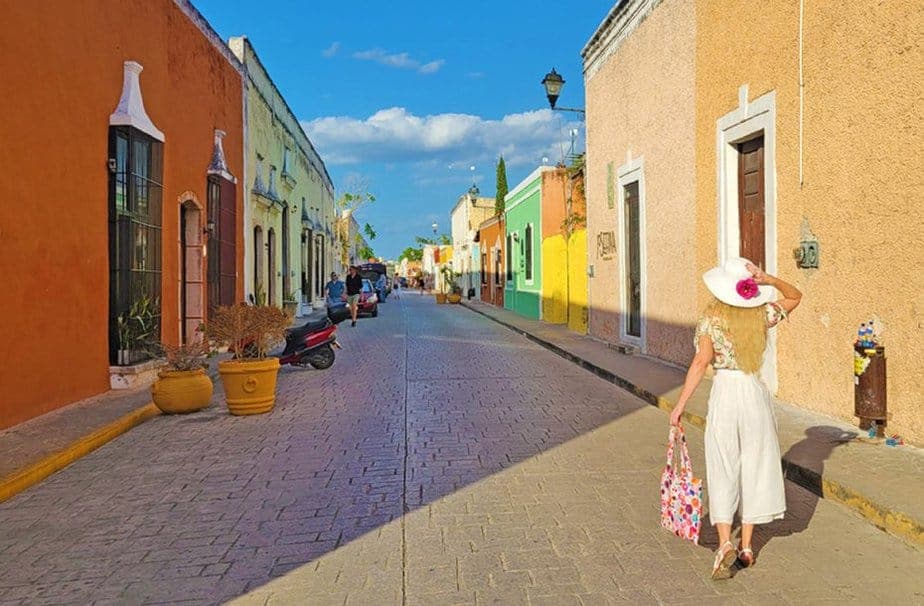
Picture it: you came for turquoise water and white sand, and then you find yourself wandering a sherbet-colored street called the Calzada de los Frailes, ducking into a swimmable cenote in the middle of town, and eating cochinita pibil so good it reorders your whole sense of what Mexican food can be. This is the deep, living Yucatán — Maya soul, centuries-old churches, and a food scene that’s earned real international attention.
You come to the coast for the sea. You remember Valladolid for everything else.
And here’s the best part: from your PlayaStays base in Playa del Carmen or Tulum, it’s genuinely easy — a straight shot on the toll road, an ADO bus, or now even the new Maya Train. In this guide I’ll walk you through getting there, the cenotes worth the swim, the ruins (yes, Chichén Itzá is right next door), where to actually eat, and where to wander. Give Valladolid one day, and I promise it’ll be the one you talk about most.
Getting to Valladolid from the Riviera Maya
Valladolid sits about two hours inland from Playa del Carmen, deep in Yucatán state, and you’ve got four good ways to reach it. The one I recommend most is a rental car: take the 180D cuota (the toll road), and you’ll roll into town relaxed, with the freedom to chase cenotes that buses never touch. If you’d rather not drive, the ADO bus from Playa del Carmen or Cancún is comfortable, air-conditioned, and drops you a few blocks from the plaza. Organized tours are the hands-off option — usually bundling a cenote and Chichén Itzá — and the newest arrival, the Tren Maya (Maya Train), now has a Valladolid station, which makes the whole thing feel almost too simple.
A day trip is very doable — leave early, you’ll have a full, rich day. But if you can swing it, stay one night. The tour buses clear out by late afternoon, and Valladolid in the evening, with its Parque Francisco Cantón glowing and the streets nearly empty, is a different, quieter magic.
Cenotes in and around Valladolid

If there’s one reason I tell guests to point the car inland, it’s the cenotes. Valladolid sits right on top of the densest cluster of them in the Yucatán — those sunken limestone pools, half cave and half swimming hole, that the Maya have held sacred for centuries. Within a 20-minute radius you can go from a cenote in the middle of town to a jungle-wrapped one with a rope swing. I always tell people to bring water shoes (the limestone is slick), to rinse off at the showers before getting in, and to wear only biodegradable sunscreen — the rules protect water everyone shares, and they’re taken seriously here.
The easiest one is Cenote Zací, a short walk from the main plaza — a semi-open cavern with hanging vines and dark catfish circling below, perfect if you only have an hour. For the photo everyone knows, it’s Cenote Suytun, with its stone platform and the single shaft of light that drops through the cave roof. Go right when it opens — that beam only lines up midday, and the queue for the platform gets long once the tour vans arrive.
My personal favorite is Cenote Oxman at Hacienda San Lorenzo, where roots spill down the walls and there’s a rope swing to launch yourself off into the deep green water. Just outside town, the Dzitnup pair — Xkeken and Samula — sit across the road from each other: one a domed cavern lit by a small skylight, the other open enough that a tree’s roots drink straight down into the pool. A little farther out, Cenote Hubikú is a vast, bowl-shaped one often paired with Ek Balam. Pick two for a day — three if you start early — and you’ll see why I send everyone here.
The ruins: Chichén Itzá, Ek Balam & Cobá

Valladolid is the smartest base in the Yucatán for ruins, and the headliner is right next door. Chichén Itzá — one of the New 7 Wonders of the World — is roughly 45 minutes away. My one non-negotiable piece of advice: go early. The gates open in the morning, and arriving right then means you beat both the brutal midday heat and the wall of tour buses that pours in from the coast by mid-morning. If you happen to visit around the spring or fall equinox, watch El Castillo at the right hour: the afternoon sun throws a shadow down the staircase that looks exactly like a serpent slithering toward the earth — pure Maya astronomy, built in stone.
But don’t stop at the famous one. Just 30 minutes north of Valladolid, Ek Balam is the one I quietly love more — far fewer crowds, and you can still climb the Acropolis to a stucco frieze of winged figures and a sweeping view over the jungle canopy. Farther south, Cobá spreads through the forest along old Maya causeways, best explored on a rented bike. Pair Chichén Itzá with a cenote on the way back and you’ve built a near-perfect day.
Where to eat: Yucatecan food worth the drive
Here’s where Valladolid genuinely surprises people. Yucatecan cooking is its own world — slow-roasted, citrus-bright, gently smoky — and the town’s food scene has earned international recognition for good reason. Start with cochinita pibil (pork marinated in achiote and bitter orange, wrapped in banana leaf, roasted until it falls apart), then work through the local specialties: longaniza de Valladolid, the town’s smoky sausage; lomitos de Valladolid, a regional pork stew; papadzules, egg tacos drowned in pumpkin-seed sauce; and salbutes and panuchos, the crisp-tortilla street snacks I could eat daily. For dessert, find a street cart making marquesitas — crepe-like rolled wafers, traditionally with Edam cheese and Nutella — and try a sip of xtabentún, the anise-and-honey liqueur.
For the classic sit-down meal, El Mesón del Marqués on the main plaza serves Yucatecan staples in a colonial courtyard. Taberna de los Frailes sits in a leafy garden near the convent and does refined regional plates, while Yerbabuena del Sisal is my go-to for a fresh, garden-driven lunch. For something romantic, Conato 1910 and Le Kaat both punch well above their size. And for a coffee or a chocolate break between cenotes, IX CAT SMOOK is a lovely little stop.
Wandering the streets: shopping & colonial Valladolid

Even with no plan at all, Valladolid rewards a slow wander. The Calzada de los Frailes is the postcard — a pastel-fronted lane lined with small design shops, boutique hotels, and galleries — that runs toward the Convento de San Bernardino de Siena, where there’s an evening video-mapping light show projected onto the 16th-century facade. Back on the plaza, the Templo de San Servacio anchors the heart of town, and a couple of blocks away Casa de los Venados houses one of Mexico’s great private folk-art collections — thousands of pieces, shown on a guided tour.
For shopping, this is one of the best towns in the region. Hunt for Yucatecan hammocks, hand-embroidered huipiles and textiles, local honey and chocolate, and stop into Coqui Coqui, the perfumery whose scents bottle the whole peninsula. The Mercado Municipal is where to feel the everyday rhythm of the town. And if you have an extra half-day and a curiosity for the deeper Maya world, the nearby village of Xócen — held in local tradition to be the very “center of the Maya world” — is rich in mysticism and legend, and emblematic of the authentic community tourism that surrounds Valladolid.
Know before you go
- Cash & cards: Bigger restaurants and hotels take cards, but cenote entry, market stalls, marquesita carts, and small shops often want pesos in cash — carry some.
- Heat & water: Inland Yucatán is hotter and more humid than the breezy coast. Carry water, wear a hat, and pace the midday hours.
- Getting around: The historic center is small and walkable; you only need a car or taxi for the cenotes and ruins outside town.
- Biodegradable sunscreen only: Cenotes ban regular sunscreen and bug spray to protect the water — pack the reef-safe kind, and rinse off before you swim.
- Timing: Start early for Chichén Itzá and Suytun (beat the heat and the buses), and if you can, stay the night to have the streets to yourself.
Your easy launchpad to Valladolid
The reason I can send everyone here so confidently is that the trip starts from the right place. With a comfortable PlayaStays home base in Playa del Carmen or Tulum, an inland day to Valladolid stops being a logistics puzzle — you’ve got a relaxed coastal home to leave from in the morning and come back to at night, plus a local who’s happy to point you toward the toll road, the right cenote, and the best plate of cochinita in town. Beach by morning, Pueblo Mágico by afternoon: that’s the Riviera Maya at its best.
Frequently asked questions
How far is Valladolid from Playa del Carmen and the Riviera Maya?
Is Valladolid better as a day trip or an overnight stay?
Which cenote near Valladolid is the best?
Is Valladolid worth visiting?
When is the best time to go?
Can you visit Chichén Itzá from Valladolid?
Find out what your property could earn with PlayaStays
Free revenue estimate. Based on real market data from our managed portfolio.
Get My Free Estimate →